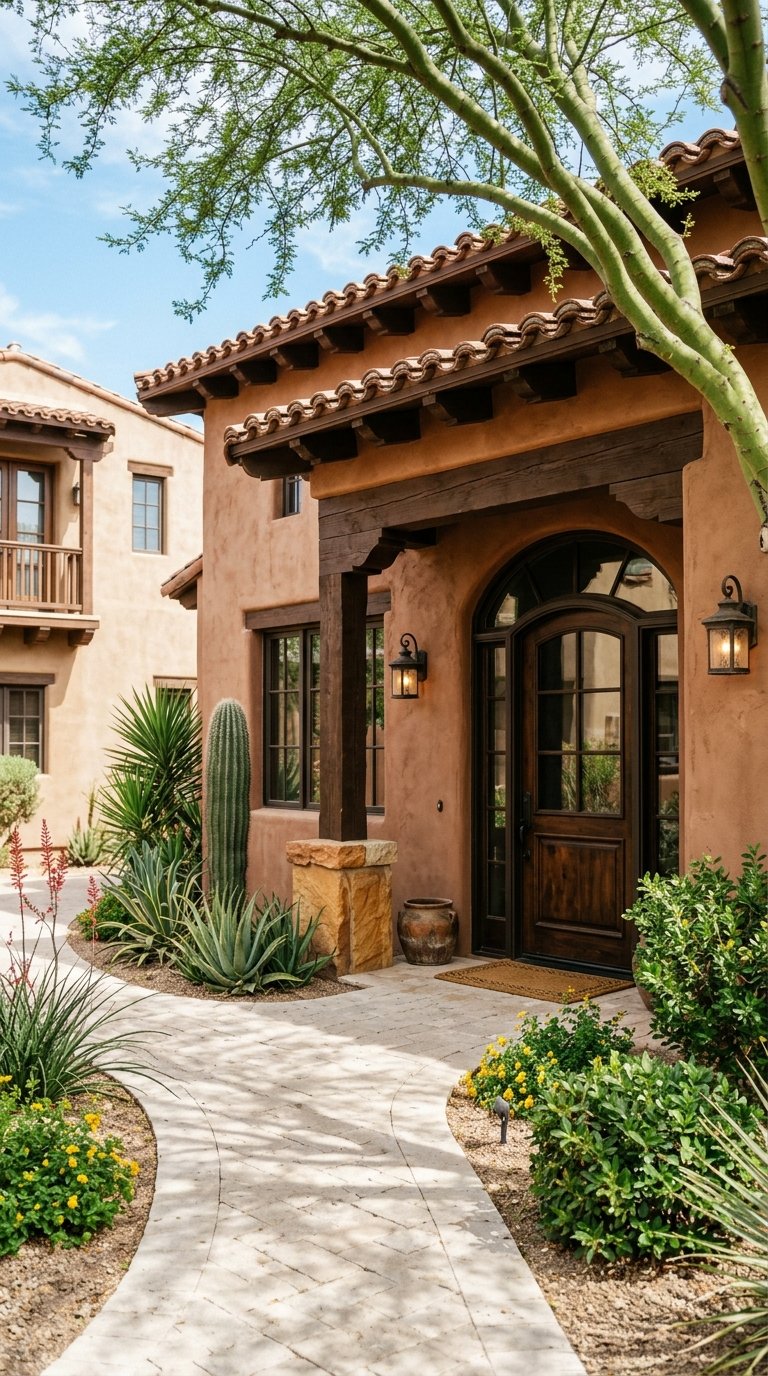
D.C. Ranch Village Comparison for Move-Up Buyers
June 18, 2026
June 18, 2026
If you are looking for more space in North Scottsdale, D.C. Ranch can quickly rise to the top of your list. The challenge is that the community is not one single experience. Each village offers a different mix of home types, daily convenience, privacy, and lifestyle amenities, so choosing the right fit matters. This guide will help you compare the four D.C. Ranch villages through a move-up buyer lens so you can tour with more clarity and confidence. Let’s dive in.
D.C. Ranch is a 4,400-acre master-planned community in North Scottsdale next to the McDowell Sonoran Preserve. According to the community, it includes 26 neighborhoods across four villages, with more than 2,800 homes and over 7,000 residents. That scale gives you a broad range of choices while still keeping a connected community feel.
Across the community, the lifestyle foundation is strong and consistent. D.C. Ranch says it offers 47 parks, more than 50 miles of paths and trails, two community centers, 24-hour community patrol, and 23 gates. For many move-up buyers, those shared features are part of the draw before you even narrow down a village.
Market Street also plays a big role in the overall appeal. Located at Thompson Peak Parkway and Pima Road, it serves as the mixed-use center for dining, shopping, office space, and neighborhood services. It is both a practical errand stop and a community gathering point.
When you are moving up, square footage is only part of the decision. You are often looking for a better daily rhythm, a home that fits your current stage of life, and a neighborhood that feels aligned with how you want to spend your time. That is why the best comparison points in D.C. Ranch are convenience, club life, privacy, and product type.
A helpful touring approach is to look at four things in each village:
That framework can help you move beyond first impressions. It also makes it easier to separate what feels exciting on a tour from what will actually support your day-to-day lifestyle.
Desert Camp sits east of Pima Road and south of Thompson Peak Parkway. It includes single-family homes, attached patio homes, condominiums, and townhomes, and it is also home to Market Street. For move-up buyers who want options, this village usually offers the broadest housing mix within D.C. Ranch.
The lifestyle here is shaped by accessibility and activity. With Market Street inside the village, restaurants, services, and casual meet-ups are woven into daily life. If you value being able to run errands, grab dinner, or meet friends without venturing far, Desert Camp has a strong practical advantage.
The Desert Camp Community Center adds another layer of appeal. Community materials describe it as the heart of D.C. Ranch activity, with heated pools, fitness spaces, basketball, tennis, pickleball, BBQ areas, and indoor and outdoor event facilities. That makes this village especially appealing if you want amenities that are easy to use often.
For move-up buyers, Desert Camp can make sense when you want to improve your lifestyle without necessarily jumping straight to the most private or estate-oriented setting. It often reads as social, accessible, and flexible.
Country Club is one of the two original D.C. Ranch villages and is bounded by Pima Road and the Reata Wash. The architecture includes Western Regional Farm House, Ranch House, and Spanish Eclectic styles, along with some Pueblo and Prairie influences. The result is a village with a classic and established feel.
Its main lifestyle anchor is The Country Club at DC Ranch. This private club includes golf, tennis, fitness, swimming, dining, social events, and a 45,000-square-foot clubhouse called the Ranch Hacienda Clubhouse. If club access is central to how you picture your next move, Country Club deserves close attention.
For many move-up buyers, the appeal here is not just the homes themselves. It is the sense of living in a village where the club experience helps define the rhythm of the neighborhood. That can feel very different from a village where convenience or parks are the main draw.
Country Club tends to fit buyers who want detached homes, a more established village identity, and a lifestyle that feels tied to golf and country club amenities. It is less about being in the middle of daily retail activity and more about a classic Scottsdale club environment.
Desert Parks is located east of Pima Road and south of Legacy Boulevard. It includes custom and non-custom single-family homes, attached homes, and luxury apartments. That creates a mixed housing profile, but the village itself tends to feel more tucked away and residential than Market Street-centered areas.
Official community materials emphasize parks, natural wash areas, private gated access, shade, open areas, play structures, and low-density lighting. Those details suggest a village designed to support a quieter, more neighborhood-focused experience. For some move-up buyers, that balance can be very appealing.
If your ideal setting leans toward paths, open space, and a more residential atmosphere, Desert Parks may stand out. It can offer a different mood from the more convenience-driven feel of Desert Camp or the club-focused identity of Country Club.
This village is often worth a closer look if you want strong connection to outdoor spaces and a setting that feels calm without leaving the larger D.C. Ranch amenity network behind. It is a fit conversation as much as a product conversation.
Silverleaf is described by the community as an exclusive enclave in the McDowell Mountain hillsides. Homes feature Spanish and Mediterranean Revival estate architecture, and the village includes formal estate gardens, significant open desert space, and many custom lots on the Silverleaf Golf Course or hillside view sites. Among the four villages, it carries the most private and resort-like identity.
The village also includes interconnected neighborhoods, tree-lined streets, paved alleyways, and 11 parks. Its club anchor is The Silverleaf Club, which features a Tom Weiskopf-designed 18-hole championship golf course, a 50,000-square-foot clubhouse, spa facilities, pools, and both fine and casual dining. That combination helps define Silverleaf as the estate-and-club benchmark within D.C. Ranch.
For move-up buyers, Silverleaf is usually less about broader product variety and more about a very specific lifestyle goal. If you are prioritizing privacy, custom home settings, hillside placement, or a highly refined club atmosphere, this village may align most closely with what you want.
Silverleaf is not a better choice for everyone. It is simply the most distinct option for buyers seeking an estate-oriented setting inside the larger D.C. Ranch community.
While each village has its own personality, several community-wide features can shape your experience no matter where you buy. The trail network is one of the strongest examples. D.C. Ranch says its 50-plus miles of paths and trails connect neighborhoods, parks, community centers, and the preserve without requiring residents to cross busy streets.
That connectivity can influence how a village feels in daily life. A home that looks similar on paper may feel very different depending on how quickly you can step onto a path, reach a park, or move through the community on foot or by bike.
The community centers also matter. Desert Camp serves as the more active fitness and events hub, while The Homestead is described as a grand hall and outdoor haven with coffee service, a veranda, splash pad, playground, basketball court, event space, and playhouse theatre. Depending on how you live, one may matter more to you than the other.
The preserve setting is another major factor. D.C. Ranch is adjacent to the McDowell Sonoran Preserve, which the community describes as the backyard to much of D.C. Ranch. For buyers drawn to North Scottsdale for desert scenery and trail access, that connection can be a meaningful part of the long-term value of the move.
If the villages are all blending together, start with the lifestyle question instead of the floor plan question. Ask yourself what you want your average week to feel like, not just what you want the home to look like. That usually points you in the right direction faster.
Here is a simple way to think about the four villages:
That is not a ranking. It is a fit-based comparison. The right choice depends on which tradeoffs feel worth it to you.
Move-up buyers often know they want more, but not always what kind of more matters most. D.C. Ranch works well because it offers several versions of that next step within one broader community. You can compare convenience, privacy, club life, and home style without leaving the same general North Scottsdale setting.
The key is to tour with intention. Pay attention to the route in and out, where you would spend time most often, and whether the village supports your daily routine as well as your long-term goals. Those details usually reveal the best fit more clearly than a features list alone.
If you are weighing D.C. Ranch villages and want a grounded, local perspective, Shannon Pulsifer can help you compare the options and find the one that matches how you want to live.
Stay up to date on the latest real estate trends.


Ready to make your real estate journey smooth and stress-free? Whether you’re buying your first home, selling, relocating, or investing in Scottsdale and Phoenix, I’m here to provide expert guidance, personalized service, and unmatched dedication. Get in touch and turn your real estate goals into reality!
SHANNON PULSIFER
ADDRESS 8852 E Pinnacle Peak Rd Ste J4 Scottsdale AZ 85255